
Why Is Your Commercial Property Water Bill So High? 9 Hidden Landscaping Problems Costing Arizona Properties Thousands

Last month, your landscaping looked fine.
This month, your water bill is nearly double.
Nothing appears different.
The grass isn't flooded.
The irrigation system still turns on.
Residents haven't complained.
So what changed?
This is one of the most common questions commercial property managers ask across Arizona.
Whether you manage an HOA, apartment community, medical campus, retail center, office park, or industrial property, an unexpected increase in your water bill usually isn't random.
It's often your landscape trying to tell you something.
The problem is that many costly irrigation and landscaping issues stay hidden for weeks—or even months—before anyone notices.
By the time visible damage appears, thousands of gallons of water may have already been wasted, plants begin dying, and expensive repairs become unavoidable.
At HMS Landscape & Design, we've seen this scenario countless times.
Most high water bills aren't caused by drought.
They aren't caused by hotter weather.
And they certainly aren't "just part of living in Arizona."
They're usually caused by small problems that were allowed to become expensive ones.
In this guide, we'll walk through the nine most common reasons commercial properties experience unusually high water bills, how to identify the warning signs early, and what property managers can do before a minor irrigation issue turns into a major budget problem.
Why is my commercial property water bill so high?
The most common causes of unusually high commercial water bills are hidden irrigation leaks, broken sprinkler heads, outdated irrigation controllers, overwatering, damaged valves, inefficient landscaping, poor drainage, and a lack of preventative maintenance.
Regular irrigation inspections and proactive landscape maintenance help identify these issues early, reducing water waste and preventing costly repairs.
Hidden Problem # 1: Underground Irrigation Leaks
One of the biggest misconceptions property managers have is believing that every irrigation leak creates obvious puddles.
In reality, the majority don't.
Instead, the leak slowly saturates the soil beneath the surface while your irrigation system continues operating normally.
From above, everything appears healthy.
Meanwhile, thousands of gallons of water are escaping underground every month.
Common warning signs include:
One unusually green section of landscaping
Soil that stays damp long after irrigation stops
Mushrooms or algae appearing unexpectedly
Small sinkholes beginning to form
Water bills increasing without explanation
Because these leaks remain hidden, they're often discovered only after reviewing utility bills or when significant landscape damage occurs.
The longer they go unnoticed, the more expensive they become.

Hidden Problem # 2 Broken Sprinkler Heads That Waste More Water Than You Think
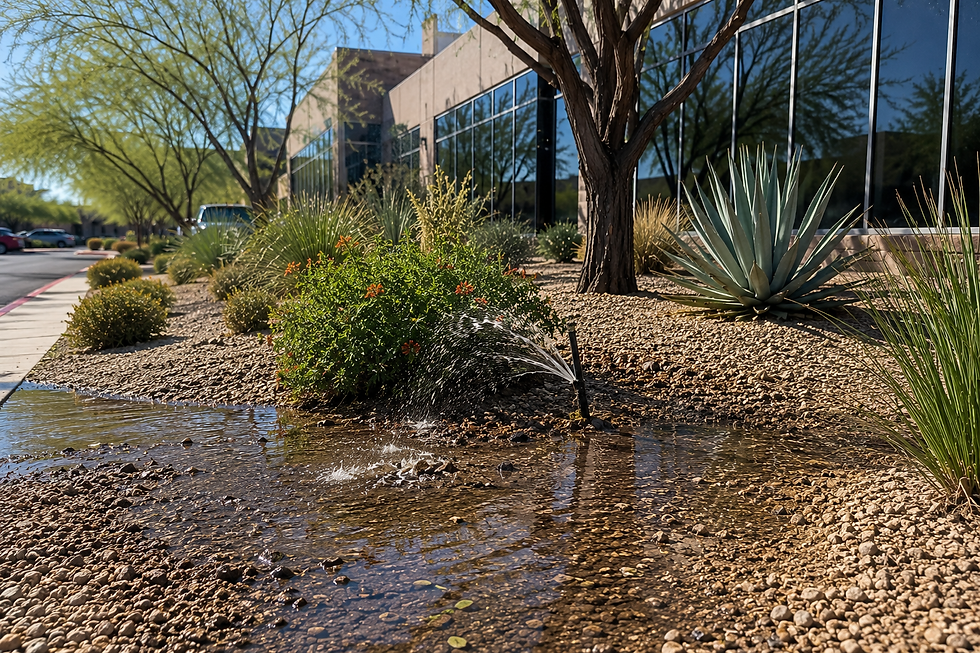
Walk through almost any commercial property, and you'll likely find at least one sprinkler head spraying the sidewalk instead of the landscape.
It might seem minor.
It's not.
Broken sprinkler heads can waste hundreds—or even thousands—of gallons of water before anyone notices.
Even worse, they create inconsistent watering patterns.
Some plants receive far too much water while others receive almost none.
The result?
Dead shrubs
Brown patches
Unhealthy trees
Increased replacement costs
Higher water bills
Replacing a damaged sprinkler head is inexpensive.
Ignoring it rarely is.

Hidden Problem # 3: Your Irrigation Schedule Is Outdated
Arizona isn't the same every month.
Yet many commercial irrigation controllers run exactly the same schedule all year long.
That means:
Spring watering during summer.
Summer watering during winter.
Overwatering after rainfall.
Running irrigation during cooler months when plants require significantly less water.
Smart irrigation systems automatically adjust watering schedules based on weather conditions, temperatures, and seasonal changes.
Older controllers simply continue following outdated programming.
Over time, this unnecessary watering becomes one of the largest contributors to excessive water bills.
Ask Yourself
Has your irrigation schedule been adjusted recently?
Was it updated after seasonal weather changes?
Is anyone regularly reviewing your controller settings?
If the answer is "I'm not sure," it's worth having the system evaluated.
Hidden Problem # 4: You're Watering the Wrong Plants
Arizona landscaping isn't just about selecting attractive plants.
It's about selecting plants that belong here.
Unfortunately, many commercial properties still contain high-water-use plants installed years ago.
As these mature, they require increasing amounts of irrigation while still struggling during extreme heat.
Meanwhile, drought-tolerant native plants often thrive with significantly less maintenance and far lower water usage.
Choosing the right plants doesn't just reduce irrigation costs.
It also:
Improves long-term landscape health
Reduces replacement expenses
Minimizes maintenance
Creates more sustainable commercial properties
One of the smartest investments property managers can make isn't watering more.
It's planting smarter.

Hidden Problem # 5: Faulty Irrigation Valves Can Waste Water Every Day
Your sprinkler heads may look like they're working perfectly, but that doesn't mean your irrigation system is.
Hidden below ground are irrigation valves that control when and where water flows throughout your property. Over time, these valves can wear out, become clogged, or fail completely.
When that happens, certain irrigation zones may continue receiving water even when they shouldn't.
Unlike a broken sprinkler head, a faulty valve often goes unnoticed because everything appears to be operating normally.
Common signs of a failing irrigation valve include:
One irrigation zone always seems wetter than the others
Water pressure changes unexpectedly
Certain areas never seem to dry out
Irrigation continues running after the controller has shut off
Water bills continue increasing despite no obvious leaks
Routine irrigation inspections can catch these issues long before they become expensive.
The best way to catch these problems early is through a proactive Commercial Landscape Maintenance program that includes routine inspections, irrigation monitoring, and seasonal landscape care.

Hidden Problem # 6: Poor Drainage Doesn't Just Waste Water—It Damages Your Landscape
Drainage problems are often mistaken for irrigation problems.
In reality, they frequently work together.
When water has nowhere to go, it pools around trees, shrubs, sidewalks, and foundations.
Over time this can lead to:
Root rot
Dead plants
Soil erosion
Trip hazards
Mosquito breeding areas
Damaged hardscapes
Foundation concerns
Arizona may be known for dry weather, but when monsoon storms arrive, poor drainage becomes one of the biggest liabilities on a commercial property.
A professionally designed drainage system protects both your landscape and your investment.

Hidden Problem # 7: Water Pressure Issues Are Costing More Than You Realize
Too much pressure.
Too little pressure.
Both create problems.
High pressure can cause sprinkler heads to mist instead of watering plants, allowing water to evaporate before it ever reaches the soil.
Low pressure often leaves portions of your landscape underwatered while other areas receive too much.
Either way, you're paying for water that isn't doing its job.
Professional irrigation systems should be periodically evaluated to ensure pressure is optimized for every irrigation zone.

Hidden Problem # 8: Deferred Landscape Maintenance Gets Expensive Fast
One of the biggest mistakes property owners and managers make is waiting until something breaks before addressing it.
Unfortunately, landscaping doesn't work that way.
Small issues compound over time.
A minor irrigation leak becomes a major repair.
An overgrown tree becomes a storm hazard.
Dead plants require full replacement instead of simple maintenance.
The reality is simple:
Preventative maintenance almost always costs less than emergency repairs.
The most successful commercial properties don't necessarily spend more on landscaping—they simply stay ahead of problems.

Hidden Problem # 9: Your Landscape May No Longer Match Arizona's Climate
Many commercial properties were landscaped years—or even decades—ago.
Since then:
Water costs have increased.
Drought conditions have changed.
Plant availability has evolved.
Irrigation technology has improved.
Property expectations have risen.
If your landscape was designed years ago, it may simply no longer be the most efficient option.
Strategic renovations can often reduce water usage, lower maintenance costs, improve curb appeal, and extend the life of your landscape.
Sometimes the smartest way to save money is to stop maintaining an outdated landscape and start investing in one that's built for today's Arizona conditions.
Commercial Property Water Bill Checklist
If your water bill has increased recently, ask yourself:
Have we inspected our irrigation system in the past six months?
Are there any unusually green or constantly wet areas?
Have we replaced damaged sprinkler heads?
Are irrigation schedules adjusted seasonally?
Are we using appropriate low-water Arizona plants?
Have our irrigation valves been inspected?
Does water pool after irrigation or storms?
Have we noticed changes in water pressure?
Are we addressing maintenance proactively or reactively?
If you answered "no" or "I'm not sure" to several of these questions, your landscape could be costing you more than it should.
Why Preventative Maintenance Saves Money
The most expensive landscaping problems rarely start as expensive problems.
They start as small issues that go unnoticed.
Routine inspections and preventative maintenance help property managers:
Catch irrigation leaks early
Reduce water waste
Extend the life of plants
Prevent emergency repairs
Improve curb appeal
Stay within annual budgets
Reduce resident complaints
Protect long-term property value
The result isn't just a healthier landscape.
It's fewer surprises.
When commercial water bills increase, it's easy to assume there's nothing you can do.
In reality, your landscape is often the first place to look.
Hidden irrigation leaks, outdated watering schedules, failing valves, poor drainage, and deferred maintenance can quietly drive up costs long before visible damage appears.
The good news?
Most of these problems are entirely preventable with regular inspections and proactive maintenance.
For property managers, HOA communities, office parks, retail centers, apartment communities, and commercial properties across Arizona, staying ahead of these issues doesn't just save water—it protects budgets, improves curb appeal, and helps create properties people are proud to visit.
Is Your Landscape Costing You More Than It Should?
Don't wait until your next water bill—or your next emergency repair—to find out.
Schedule a consultation with HMS Landscape & Design to discuss your property's landscaping, irrigation system, and long-term maintenance goals.
We'll help you identify opportunities to improve efficiency, reduce unnecessary costs, and keep your commercial property looking its best.
Ready to get started? Contact HMS Landscape & Design today to discuss your commercial landscaping needs.
Frequently Asked Questions
How often should commercial irrigation systems be inspected?
At minimum, twice per year. Many Arizona commercial properties benefit from quarterly inspections due to extreme seasonal conditions.
Can landscaping really affect water bills?
Yes. Irrigation is often one of the largest outdoor water expenses. Leaks, poor scheduling, and outdated systems can significantly increase monthly costs.
What's the most common cause of high commercial water bills?
Hidden irrigation leaks and inefficient watering schedules are among the most common causes.
Are smart irrigation controllers worth it?
For many commercial properties, yes. They can automatically adjust watering schedules based on weather conditions and help reduce unnecessary water use.
When should I renovate instead of repairing my landscape?
If your property consistently experiences high maintenance costs, recurring irrigation issues, or outdated plant material, a landscape renovation may provide better long-term value than ongoing repairs.


Comments